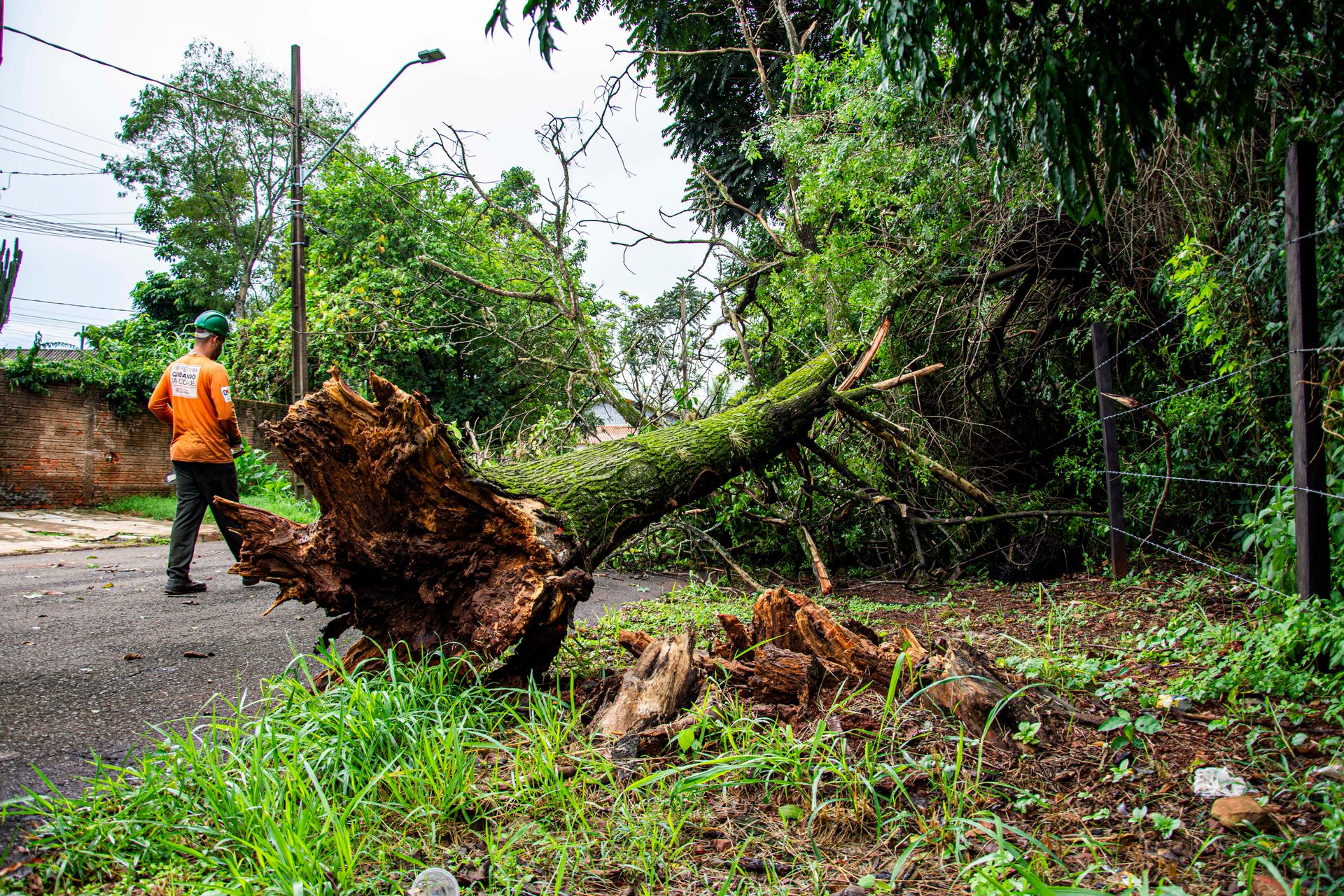
Late summer storms in Johns Creek can show up fast and leave behind a big mess. The wind and heavy rain don’t just knock over patio furniture or flood gutters. They can also cause serious problems for trees. Limbs snap, trunks split, and in some cases, whole trees tip over. Afterward, many yards are left with big cleanups waiting.
When a tree falls or takes damage, quick action matters for safety, for property, and for anyone trying to avoid long-term issues like root decay or insect problems. It isn’t just about clearing branches either. What’s left behind, like a large stump or exposed roots, can be trouble later on. That’s where clean removal and stump grinding in Johns Creek become especially helpful. Knowing what to look for and what to do next helps keep your yard safe and healthy after the storm passes. As part of our tree removal and stump grinding services, we use professional equipment to remove unwanted trees and grind stumps, then haul away debris so your yard is ready for new plans.
When Summer Storms Damage Your Trees
Storms in North Georgia often come with strong wind gusts, thunder, and fast-falling rain. This puts pressure on any older or weaker trees in the yard. It’s common to see large branches split right off the trunk or entire trees lean from soaked soil. Sometimes the damage is easy to spot. Other times, the problems are hidden.
Cracks in the main trunk may be small but can grow worse with time. Tree roots might pull halfway out of the soil and start to rot without showing much above the grass line. And if a tree leans even a little, it may be unstable enough to drop limbs in the next wind.
These signs don’t always mean total removal is needed, but they do point to possible danger. A tree near a house, driveway, or walkway shouldn’t be left unstable. It’s not just about property damage, it can be a real safety issue too.
Why Safe Tree Removal Matters
When a storm-damaged tree needs to come down, it’s important to do it the right way. Trying to cut it down alone with a chainsaw might feel quicker, but it can go wrong in seconds. Storm-broken trees are harder to predict. The weight isn’t balanced, and weakened trunks can snap where you least expect.
Here are a few things that make storm-related tree removal risky for homeowners:
- Hidden splits or cracks that give out without warning
- Loose limbs still caught in upper branches (called widow-makers)
- Roots buried awkwardly in the soil, making the tree hard to control
Professionals know how to check for these hidden risks before removing a damaged tree. They use the right safety gear, take down trees piece by piece when needed, and make sure everything is done according to local guidelines. That kind of caution keeps people and property safer, especially in tight suburban areas.
What Happens After Tree Removal
Once the tree is gone, it leaves behind more than a clear view. The stump and roots stay where they are unless removed. These leftovers may seem harmless at first, but they often create future problems. Insects like ants or termites can move in. Roots might keep growing sideways and damage walkways or lawns. Stumps also become trip hazards or make mowing harder than it needs to be.
That’s where stump grinding comes in. When we talk about stump grinding in Johns Creek, we’re usually referring to breaking the stump down below ground level so the yard can be used again normally. It prevents regrowth, removes the eyesore, and stops roots from causing more damage. Plus, it gives room to replant grass, new sod, or other landscaping where the tree used to be.
Local Factors That Affect Tree and Stump Removal
In Johns Creek, removing storm-damaged trees comes with some unique challenges. The soil here has a lot of clay, which doesn’t drain water quickly. After a strong rain, roots can loosen from soggy ground. That often leads trees to lean or fall more easily, especially on sloped property.
Many homes in this area have mature trees between houses or near property lines. That means removal can be tricky, with limited space to work. Some neighborhoods also have HOA rules about when or how trees can be taken down or replaced.
Other local factors that impact removal include:
- Dense tree coverage that makes access harder
- Thick root systems buried in tight suburban yards
- Humid summers that slow drying and keep soil soft for longer
Knowing what the ground is like, and where the property lines fall, helps decide the safest and cleanest way to remove trees and stumps without leaving lasting damage.
Clearing Storm Debris the Right Way
After a rough storm, your first instinct might be to get outside and start cleaning up. That makes sense, especially when branches are scattered across the lawn. Still, there’s a line between what’s safe to handle and what’s better left alone.
Here’s a simple way to think about post-storm cleanup:
- It’s fine to gather small limbs or leaves by hand
- Don’t pull on tangled limbs stuck in trees, they can shift suddenly
- Leave any roots, leaning trunks, or large debris to the experts
Trying to remove anything heavy or buried can cause new problems. Digging too close to utility lines or property features like fences risks more damage. And using chainsaws or axes without warning can make a messy situation worse. It’s always smarter to take a step back and get a full picture of what’s going on before any action is taken.
Keep Your Yard Safe and Clean After the Season’s Storms
Late summer storms may leave behind more than puddles and bent branches. Removing trees safely, cleaning up debris, and handling stumps are all part of getting a yard back to normal. A fast, thoughtful response helps lower long-term risk and keeps outdoor spaces more comfortable heading into fall.
If parts of your yard feel soft underfoot, or you notice a tree leaning where it didn’t last week, those signs may point to deeper issues. Keeping an eye on what storms leave behind, and clearing it the right way, makes a big difference as the seasons change.
Storm damage may leave broken trees or leftover roots in your yard before the next round of weather, and tree removal is only half the job because what remains underground can continue to cause issues if not handled properly. We help homeowners prepare their outdoor spaces by managing every part of the cleanup, including stump grinding in Johns Creek to safely remove the base and clear the way for future planting. At All Star Landscaping, we do things the right way from start to finish. Call us to schedule a visit and talk through what’s best for your yard.