Lawn care doesn’t stop when the temperatures drop in Alpharetta, Georgia. In fact, late fall and early winter can be an important time to check how your grass is holding up. This is when you might notice signs that your lawn didn’t bounce back from summer or fall like it normally does. It can start looking dull, uneven, or thin.
When this happens, winter overseeding could be worth considering. Adding new grass seed during colder months helps fill in bare spots and keep things looking green and full come spring. But overseeding isn’t something every lawn needs. That’s why it’s helpful to know what signs to look for and how it ties into seasonal lawn maintenance in Alpharetta. For many homeowners in Alpharetta and nearby Johns Creek, that kind of regular care comes from All Star Landscaping, a full-service landscaping company that handles everything from outdoor design to ongoing maintenance.
Signs Your Lawn May Be Thinning Out
Most lawns don’t go totally dormant in Alpharetta during the winter, but growth slows down. If your yard starts showing signs of wear once the weather cools off, it might be time to act. Watch for these clues that your grass may be too thin:
• Bare or patchy sections that didn’t recover after summer or fall
• Grass that feels crunchy, wiry, or flattened when you walk on it
• A dull, faded look across the lawn that changes the feel of your whole yard
These signs aren’t always obvious right away, especially if leaves have been covering the yard for much of the fall. But once you do your final cleanup, any thin or weak areas will likely stand out.
What Causes Lawn Stress Before Winter in Alpharetta
Strong lawns can handle winter better, but not every lawn heads into December in good shape. A few common issues can put stress on your yard before winter fully sets in:
• Heavy foot traffic during summer creates compacted soil, which weakens roots
• Heat damage from July and August sets in deeper than you think
• If soil wasn’t treated or fertilized properly in fall, it may be harder for grass to recover
• Leaf piles or clogged gutters leave water sitting too long, leading to thinning or mold
In many yards, these problems stack up slowly. By the time cooler weather hits, what seemed like small setbacks start to have a bigger impact on how well the lawn holds together.
How Overseeding Helps Support a Healthier Winter Lawn
Overseeding is the process of adding fresh seed to an existing lawn. It doesn’t replace your grass, just reinforces it. If your yard is already stressed from summer and fall, this extra layer can make a big difference through the winter and into next spring.
Here’s why many homeowners include this step in their lawn maintenance in Alpharetta:
• It fills in gaps, so you’re less likely to deal with weeds or bare patches after winter
• New seeds boost root health, giving your lawn a better foundation when growth starts again
• Overall appearance improves, your yard looks greener, thicker, and more even through colder months
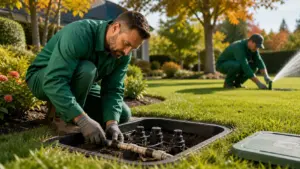
We install and service irrigation systems for homes in Alpharetta and surrounding suburbs, which helps new seed receive steady moisture while limiting wasted water. When paired with other seasonal care like proper watering and cleanup, overseeding helps maintain the lawn’s strength without having to start over come spring.
When and How Overseeding Is Most Effective in This Region
Timing makes a big impact. In North Georgia, it’s usually best to overseed around late November through early December, just before the coldest weeks. That gives the seeds enough time to settle in without baking under the sun or drying out.
Grass type plays a big role. Lawns in Alpharetta typically do well with turf-type fescue or perennial ryegrass. These varieties stay green longer and handle cooler weather better than warm-season types.
If overseeding happens without the right prep, though, results may fall flat. Professional care helps by knowing when to aerate the soil, how to pick the best seed mix, and how to space the timing between mowing and seeding. Correct watering plays a key part, especially in the early weeks while the seed is settling.
What to Watch Out For If You Delay Overseeding
Postponing overseeding can leave your lawn open to a few frustrating problems. If the grass stays too thin into winter, moisture, weeds, and erosion can start to take over. Here are some things that might go wrong if overseeding is skipped:
• Moss and weeds find open space to grow in patchy areas
• Bare spots on sloped parts of the yard can lose soil from water flow
• More work is needed in spring to repair dead patches or reseed from scratch
A lawn going into winter too weak is more likely to be overrun or uneven by the time spring arrives. Catching it early can keep things simpler down the line.
A Stronger Lawn Starts with the Right Winter Steps
Not every lawn needs winter overseeding, but if yours is struggling after summer and fall, it’s worth paying attention. Spotting signs like thinning grass or bare patches means it’s a good time to think about giving your lawn a boost.
By staying ahead of these problems with consistent seasonal care, you can keep your yard looking full through the colder months and give it a better spring start. A little action now may prevent a lot more trouble later on. Alongside overseeding, we offer services like professional sod installation for an instant green yard and mulch, pine straw, and stone installation that help with weed control, moisture retention, and root protection around your grass and planting beds.
Heading into winter, a thin lawn in Alpharetta doesn’t have to be permanent. We take a comprehensive approach to seasonal care at All Star Landscaping, considering everything from soil health to overseeding schedules, so your yard is set up for long-term success. Staying on top of lawn maintenance in Alpharetta through the colder months helps protect your investment and sets you up for a healthy return in spring. Contact us today to discuss the best plan for your lawn.