In early fall, the weather in Johns Creek starts to shift. Mornings feel cooler, days get a little shorter, and everything begins to dry out after a hot, humid summer. This change does not always bring big headlines, but it can create quiet problems underground, especially in irrigation systems.
We start to hear from homeowners who are dealing with uneven watering, blocked sprinklers, or soggy patches that were not there before. If you are noticing any of those signs, it might be time to think about irrigation repair in Johns Creek before the season moves further along. Catching small issues early can keep the whole yard healthy and working the way it should.
Common Weather Changes That Stress Irrigation Systems
As temperatures drop and the air dries out, irrigation setups can start feeling the strain of shifting fall weather. Small changes outside can lead to larger problems impacting your lawn and garden without much warning. Here are a few patterns we usually notice:
- Shorter days can disrupt watering cycles, which may not match the yard’s needs anymore
- Fallen leaves block sprinkler heads, especially if they pile up near valves or corners
- Lower humidity often shows up as dry patches across the lawn, which were not there in summer
These shifts can creep up quietly, especially if you have been relying on a summer schedule. Early fall is when watering needs to get smarter, not stop altogether. When the air gets drier, it removes moisture from the soil quicker than you might think.
Signs Your Irrigation System Is Not Working Right
Sometimes trouble shows up slowly and sometimes all at once. We have seen late-season failures pop up in ways homeowners were not expecting. It helps to keep your eyes open for any changes in how things look or sound around the yard.
The most common signs to watch for include:
- Dry spots that do not improve, even after the sprinklers run
- Heads that spray in the wrong direction or never rise all the way
- Wet zones or puddles in places where water should not collect
- Lower water pressure or odd noises when the system turns on
If any part of the yard starts looking off, it is usually not random. These symptoms often point to something hidden in the system that is slowing things down or wearing out.
Wear and Tear After a Full Summer of Use
Summer can be tough on irrigation parts. Long hours of use under the heat, paired with storms or wind, can add more stress than most homeowners expect. As fall takes over, some of that wear starts to show.
We often find:
- Sprinkler heads that are slightly crooked from shifting soil or daily traffic
- Leaks at the base of parts that got knocked around by pets, lawn mowers, or garden tools
- Timers or smart controllers that skipped cycles without anyone realizing
- Plastic parts or pipe joints that became brittle or cracked under the summer sun
All it takes is one weak link to throw off the whole system. And when lawns start to dry out in fall, those weak spots usually show up fast.
Hidden Issues That Are Easy to Miss Without a Fall Checkup
Some problems do not show themselves right away. They might sit quietly for weeks, only making trouble once the season gets cooler or the soil becomes harder to manage.
These areas often get overlooked:
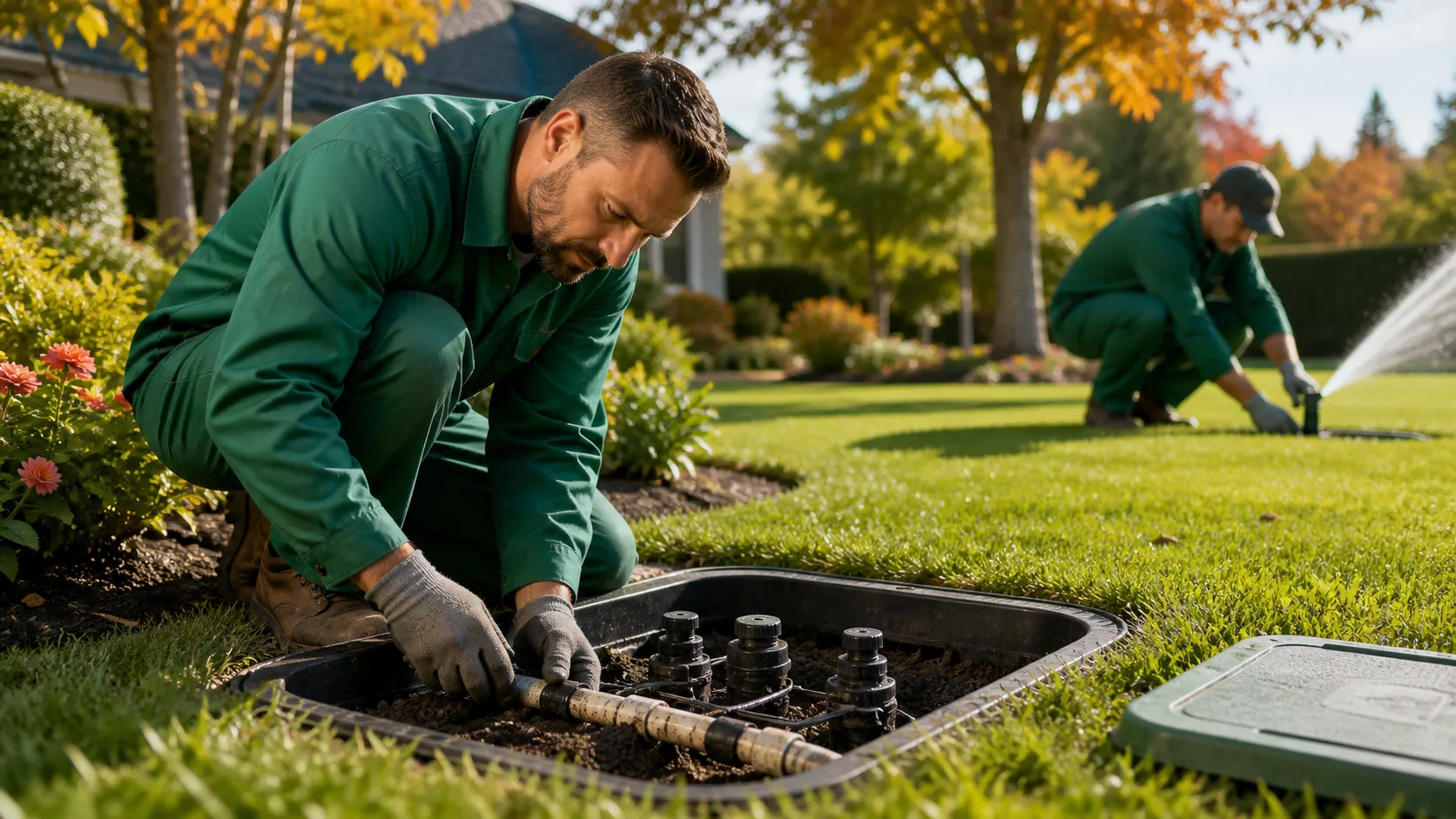
- Valve boxes that collect water but do not drain, pointing to slow underground leaks
- Tree roots from the summer digging deeper, sometimes around pipes or near spray lines
- Rain sensors that stayed active longer than needed, keeping the system from turning on
- Filters or emitters clogged with dirt, bugs, or leftover pieces of cut grass
It is these invisible glitches that cause the most stress later on, especially when homeowners think everything is working just fine. Taking a closer look in early fall can help avoid some frustrating surprises in winter.
Avoiding Bigger Problems Before Winter Hits
Finding small issues now is easier when the weather is still mild and the ground has not hardened. Once colder days arrive in Johns Creek, wet soil can freeze and make minor system leaks worse.
From what we have seen, these quick steps can help avoid bigger damage:
- Test every line to spot weak pressure or lagging sprinkler heads
- Look for pooling water around valves, even if it is just a slight puddle
- Listen for long pauses between stations or buzzing sounds from faulty parts
If things are not working quite right, early fall is a better time to schedule irrigation repair in Johns Creek than waiting until things freeze up or the lawn turns brown for good. Once pipes crack underground, it gets a lot trickier to fix.
Keep Your Yard Healthy Through the Season Shift
Fall brings plenty of changes, and irrigation systems usually feel that shift before most other areas of the yard. A little dryness may not seem like much, but it is often the first clue that something is not running quite right.
With so much of the system hidden out of sight, cooler air, drier wind, and extra leaf debris can confuse your routine without warning. What worked all summer may suddenly fall short as daylight fades.
Staying ahead by spotting those early signs and understanding how fall affects irrigation is one of the best ways to protect your yard long-term. When we keep the water flowing the right way now, it helps everything stay green, even as temperatures keep going down.
Noticing changes in your sprinkler performance or signs of water loss as the weather shifts can be a clear signal that it is time for a check-up. Fall is a smart time to inspect your system for hidden issues before they lead to more significant damage during winter. Many homeowners reach out to us for irrigation repair in Johns Creek when minor leaks or dry zones appear. At All Star Landscaping, we understand how local weather can unexpectedly affect your system, so give us a call to schedule a visit before small problems turn into major ones.