When summer rainstorms hit Johns Creek, they do not just water the plants. They bring wind, falling leaves, and a lot of debris to patios and outdoor spaces. By August, with thick air and frequent humidity, those leaves do not just sit there dry. They hold moisture and heat, which can make paved or stone surfaces slick and stained.
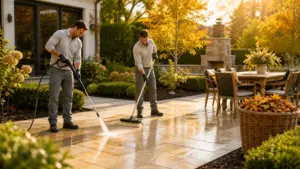
Once buildup starts, it can lead to mold that is hard to ignore. It does not take long, especially when fallen leaves are packed into corners or stuck between pavers. That is where problems can begin. Without regular cleanup, the mess can turn into slippery walkways, discolored stone, and even surface damage. Keeping outdoor areas safe and clean becomes much easier with regular care like pressure washing in Johns Creek, especially this time of year.
Why Leaves Pile Up Faster Than You Think
Leaves do not always fall and blow away. In the late summer months, they tend to stick around. Afternoon winds or movement from foot traffic can push them right where they do not belong. With enough time, they find their way into spaces under furniture, down drainage edges, and between cracks in stone or paver patios.
What keeps them in place is the moisture. Mornings often start off damp in August, with dew collecting on every surface. Then, passing rain showers during the day soak the ground and any leaves lying around. If they do not get removed quickly, they stick to the surface and layer up fast.
Here are the places where buildup happens most in late summer:
- Tight spaces between pavers or bricks
- Edges where patios meet flower beds
- Corners near planters, steps, or downspouts
- Shady areas that do not get much sunlight during the day
Once several leaf layers stack up, it is harder for water to dry out and for air to move through. That is when mold becomes more likely, and much harder to scrub off without the right tools.
How Mold Grows Under Leaf Layers
Mold thrives on moisture and still air. Leaves covering a patio trap both. When those leaves stay wet for more than a day or two, especially in hidden or shady spots, mold can begin to spread underneath them.
It often starts quietly. You might not notice anything at first. But under that top leaf layer, the stone or concrete can already be growing dark patches. It only takes a short stretch of warm, wet weather for problems to appear.
Here are some areas that mold tends to favor:
- Shaded corners that do not dry out after it rains
- Cracks between bricks or stones where water pools
- Low spots where leaves and water collect and sit too long
In patios that do not get cleaned often, mold becomes part of the surface. It bonds with the material, darkens it, and sometimes eats into it. Regular sweeping will not fix it. Moisture from leaf buildup does not just cause stains. It leaves behind a long-term impact underfoot.
Signs of Trouble You Should Not Ignore
Sometimes, mold is not easy to spot right away. Other times, it shows up in clear, visible ways. Paying attention to small signs during August can help avoid bigger issues down the road.
If you are seeing any of these things, it is worth taking a closer look at the patio:
- Black, green, or dark gray marks that do not rinse off
- Patios that feel slick to walk on, even when it has not rained
- A damp, musty smell when you are nearby, even without any puddles
Sometimes it is not just the patio itself. If outdoor cushions keep getting mildew or your shoes slip more often on the steps, the area might already have mold or buildup growing. It is always easier to clean early before stains become deep and permanent.
Why Timing Matters for Outdoor Cleaning
August is a good time to get focused on outdoor cleaning. Heat and humidity keep moisture in place for days at a time, helping mold spread faster. With the season about to change, catching problems now can save time and effort later.
Late summer cleaning prevents:
- More staining as moisture sits longer into early fall
- Long-term damage to pavers or mortar joints
- Slippery spots where someone could trip or fall
Once temperatures shift in September, outdoor areas tend to dry more slowly. With leaves still dropping well into fall, cleanup only becomes harder if the base layer is already sticky or stained. That is why pressure washing in Johns Creek is so useful this time of year. It cuts through the buildup before it gets worse, giving patios a clean slate before more leaves appear.
Clean Patios Stay Safer and Stronger
Summer leaves and random debris may not seem like a problem at first, but they add up quickly. Ignoring damp leaf piles or leftover grime could leave behind stains that last long after the heat fades. That is how cracks, erosion, and slick walkways start.
Keeping things clear now protects the structure of the patio and makes it more usable each day. Staying ahead of mold and stains means patios do not just look better. They feel safer underfoot, smell fresher, and last longer. Simple steps late in the season help those outdoor spaces survive the months ahead with less stress and fewer stains.
Keeping patios clean can feel more challenging this time of year because humidity, falling leaves, and trapped moisture work against you. August weather in Johns Creek speeds up leaf buildup and locks in grime that invites mold. One of the simplest ways to stay ahead of these challenges is with regular care like pressure washing in Johns Creek, which clears away slick buildup before it turns into a bigger issue. At All Star Landscaping, we help keep outdoor spaces safer and more attractive throughout every season. Contact us today to get started.