Old stumps can get in the way during summer, especially when you’re trying to enjoy your yard and something’s blocking the space. Things get even trickier when those stumps are sitting close to buried wires or pipes. When that happens, digging blindly is not an option. It’s not just about getting the stump out, it’s about doing it safely and in the right order.
When we talk about stump removal in Johns Creek, we always think about where those underground lines might be. Our experienced team uses professional equipment to remove unwanted stumps and prepare the land for new landscaping projects. During the warmer months, homeowners often want stumps gone before replanting or fixing up the lawn. But before any work starts, proper planning is the smartest step.
Know What’s Underground First
Before touching any tree stump, we always figure out what’s sitting underneath it. There’s no room for guessing when it comes to buried lines. Whether it’s gas, water, electric, or cable, those hidden systems need to be identified before any digging begins.
Here’s how we step through it:
- We contact the local utility marking service ahead of time, usually a few days before the job
- When the area is marked, we know exactly where it’s safe to work and where to be careful
- If the stump sits right over a marked zone, we plan the job differently or adjust our approach for a safer removal
Sometimes it’s easy to forget what runs underground in older yards, but moving forward without checking first can lead to damage, injury, or extended outages that nobody wants.
Why Stump Spot Matters
Where the stump is located changes everything. Some sit in the middle of the yard with room to work around them. Others are tucked near fences, patios, or landscaping beds. And in Johns Creek, Georgia, summer rains can impact how easily we can get in and out of certain spots.
Placement really does shape the plan. Here’s what we look at every time:
- If the stump is close to a structure, digging deep might not be possible
- Driveways or walks nearby can block access for larger machinery
- Roots from larger trees often stretch out farther than expected and can grow around utility lines or into drain pipes
Soft, wet soil after a heavy summer rainstorm can slow everything down too. The wetter the ground, the harder it becomes to move machinery without making a mess or causing rutting. That’s why we check drainage first and look for dry windows in the forecast when lining up the job.
Machine or Manual? Picking the Right Method
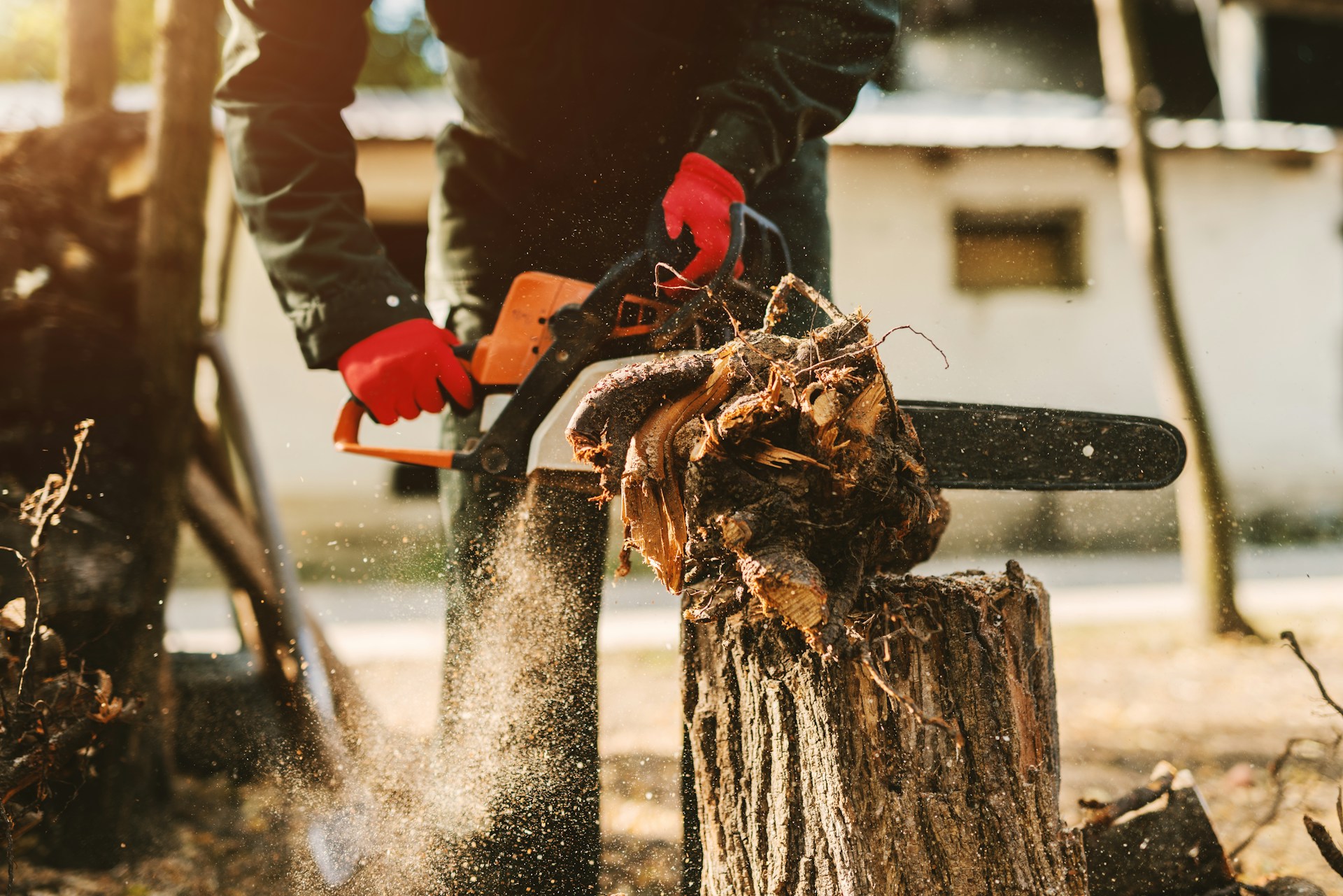
There are two main ways to get rid of a stump. One is stump grinding, which uses a machine to chip the wood down below the surface. The other option is hand or machine-assisted digging, where the stump is lifted out entirely.
Each method has its own place. When utilities are close by, we usually stay on the safe side with lighter machines or hand tools. That’s where experience really counts. Knowing what tool to use and where to stand avoids shaking nearby pipes or disturbing wires.
Smaller stumps that sit near sensitive areas often get removed with a slower, more careful dig. Bigger stumps out in the open are usually better for grinding. We match the approach to the space, not the other way around.
What Happens After the Stump is Gone
Once the stump is out of the ground, the job isn’t quite done yet. What’s left behind usually includes a hole, some loosened dirt, and maybe a few torn-up spots in the grass or mulch. In Georgia summers, loose soil can dry fast, and compacting it too soon can stress new grass or plants.
Here’s how we usually handle post-removal cleanup:
- Fill in the hole with topsoil or clean fill to match the surrounding grade
- Re-seed or patch the grass using a warm-season variety that suits mid-July growing conditions
- Smooth out the space and return mulch, pine straw, or edging that might have shifted
Planning ahead makes replanting easier once the ground settles. That helps the yard recover faster and keeps the area looking neat while the grass grows in.
When It’s Best to Ask for Help
Working around buried utilities isn’t something that should be guessed at. A simple misstep or wrong dig can turn into a bigger problem in seconds if a pipe or line is hit. That’s why stump removal near cabling or plumbing is better left to trained crews.
We’ve seen cases where the tree’s roots wrapped tightly around irrigation pipes or ran alongside power conduit. In those situations, having someone on site who understands what to do next is the difference between a quick fix and a much bigger headache. On every tree removal and stump grinding project, we prioritize safety and environmental responsibility, keeping disruption to the rest of your landscape as low as possible.
Letting someone else take this off your hands brings peace of mind, especially when you want to enjoy your yard stress-free.
A Safer Yard Starts with the Right Plan
Stump removal might seem simple at first, but when wires and pipes get involved, careful prep matters more than anything. The space around the stump, how deep the roots go, and what’s nearby all shape the decisions that follow.
By thinking through those key steps, locating lines, choosing a proper removal method, and knowing how to clean up afterward, we keep the yard safe, steady, and ready for fresh planting. Good planning means fewer delays and no surprises when it’s finally time to enjoy the yard again.
And that makes summer feel a little more worry-free.
When planning to take care of a stump near buried lines, working with experts means a safe and precise process. We guide the work from beginning to end, making sure everything under and around the stump is respected. Homeowners needing safe, well-planned stump removal in Johns Creek will appreciate our careful approach. Let All Star Landscaping help you create a yard that is both safer and easier to enjoy. Give us a call to get started.